Saturday, May 5, 2012

Technical, Social, and Scientific Planning

I feel Tartu city planning lacks a social dimension. The ideas and decisions are  dominated by technical requirements and standards while city as a human environment fills rather little in the debate. One of the main purposes of planning should be to improve the city as a living environment. We should aim toward making the streets, parks and squares better places for being. I agree that technical standards are part of the solution. But they are not the purpose of it. I would like to see a lot more focus on the human well-being in related debate.

Riia tn, Tartu 
Riia Street in the inner city.  This 4-6 lane way essentially splits the downtown into two separate parts.

I have my own understanding about what makes a livable city. To put  it briefly, it is pedestrian-friendliness. In particular, the city should be compact. The streets should be narrow enough to be easy to cross and the sidewalks sufficiently wide to make it convenient to walk with children.

I agree that these are just my preferences, and in a democratic process they should weight no more than those of the others'. However, it is perfectly feasible to study the impact of traffic speed, or street size on "livability" of a city. Obviously, the results may look different depending on what kind of urban environment one prefers, but all this can be analyzed. This means that when making adjustments in traffic, like opening Lai street for two-way driving, or choosing the location for a new building, the planners should consider the impact on the life on streets. It is all right to calculate the optimal placement of sewers or impact on traffic jams, but how do these decisions impact people on street must be discussed and analyzed as well. Even more, I am sure similar ideas have been extensively studied, and a lot is known about what makes an urban environment a comfortable place.

Unfortunately, in Tartu the technical and human planning are going on their rather different tracks. I have the impression that when doing more important (and expensive) decisions like the new Vabaduse bridge, or currently the Eastern Beltway, no one cares what it means for the human environment. There was only a little discussion before constructing the Vabaduse bridge (and it was largely ignored anyway),  I have not seen any debate about the Eastern Beltway. At the cheap end, opening Lai street for two-way traffic was not accompanied by corresponding analyzes either. All these examples include calculations from the motorized transport point of view, such as placement of traffic lights or the suitability of the bridges for river boats. But little arguments were voiced about the social side of the project. For instance, my impression is that by replacing the former pedestrian Raudsild bridge with the current 3-lane Vabaduse bridge, one made it virtually impossible to merge the dense human-scale environment in the old town with the Konsum and Economicum area on the other side of the river. The new street crossings are too inconvenient, and the wide lanes makes the bridge to a traffic corridor which we try to pass as fast as possible. I stress here that this does not mean the decision was necessarily incorrect but I strongly dislike the fact that this kind of impact was neither analyzed nor discussed. Human behavior is predictable to a certain degree. The methodology to assess it exists and is widely available.  This kind of analyzes are necessary when planning a city.

In conclusion, I feel Tartu city should strengthen their educated planning team and devote a lot more focus on the human side of the urban environment.

This posting is largely inspired by a discussion with Mikk Pärdi.

Thursday, February 16, 2012

Music as a Public Good


Anti-ACTA meeting, Nuremberg 2012-02-11
Internet seems to have thoroughly changed the playing field for the music industry. The previous attempts to introduce anti-copying measures or improve the legislation (from the music industry's perspective), have not been of much help. Below I compare the current situation of intellectual property-related industries with some other parts of the economy. Perhaps a little exaggerated, but I hope this helps to make the point.

Today, Music is Non-Excludable

Due to the new technology, it is not possible any more to limit the potential audience of a song (or a movie, or a book). This is what non-excludability means. Through most of the history it was possible to grant the access only to those who pay. Today, this does not work.
To create a non-excludable product may be something new for the recording industry but this is far from a unique situation. Much is produced around us with no way to keep the free-riders away. The examples include traditional public goods, such as street lights or clean sidewalks, open-source software, or research results. As there is no way to limit access to these goods (or, in some cases, narrowing the access is not desired), all this is given away for free.

How Does this Influence the Music Industry?

Part of the industry is probably not affected. Orchestra music, for instance, is highly subsidized anyway, and the target audience is not going to substitute an exclusive evening in the noble music-hall for a internet download. In some cases, an unknown (or even a well known) band may make most of their income from live concerts or from being invited to play at parties or other events. For this group, the new world may not look too different either.
But there are also authors who earn most of their income by selling their recordings for a fee. This is the group who may fare substantially worse. How well they do, depends on how easily they can shift to a different revenue source. Unfortunately, I do not have any data here, but I believe that any serious policy proposal should include this analysis.

Do We Need a Fat Government?

Non-excludable music is essentially a public good: once recorded, it is accessible to everyone. Public goods are typically financed through taxes (like street construction), donations (like public concerts), grants (research) or simply enthusiasm (community gardens). In particular, this suggests that government financing will play a more significant role in the future music industry. Many books, plays, and movies are created through various scholarships and grants already today.
Note that various taxes on empty CD-s or broadband internet should be seen in this light. Free music must be financed somehow, including through higher taxes. You pay CD-tax even if you never use it for copying music, exactly as you help to finance all kind of public services, even those you never use, through your income tax. This may not be all that good news for the indebted Western governments. But here we have an example of a technological change which leads to larger government role.

Would it Be Worth of It?

It seems like most people are quite happy with the new world. Unauthorized downloading seems to be overly popular and tougher rules, such as proposed by SOPA, PIPA and ACTA, cause a large-scale public outrage. It seems that most of us would rather sacrifice the recording industry than our internet-freedom. Democracy is very much about choice. By choosing free music and other intellectual products, we also get a little higher taxes and perhaps somewhat poorer choice, as there will be less money and less players in the industry.

Tuesday, January 31, 2012

Tartu Eastern Beltway: How Does It Influence the Downtown?

The largest traffic project in the coming years in Tartu is possibly the Eastern Beltway, including a long bridge over Emajõgi. This should lead some traffic away from the overloaded streets in the inner city. I have never seen a discussion about the potential impact of it on the downtown and the city structure. I give a few thoughts here, mostly from pedestrian and cyclist perspective.

*
The beltway improves the accessibility of outskirts, including South Mall (Lõunakeskus).

The new bridge, road, and railway underpass will facilitate the access to South Mall and other far-lying areas for the inhabitants of Annelinn, the largest residential neighborhood in Tartu. In this way the customer base in the outskirts may grow at the expense of the downtown. True, it may crowd out primarily the smaller shopping centers in Annelinn itself and the impact on downtown may be limited—it depends on where Annelinn inhabitants currently do their shopping. However, I can hardly see how the opposite could happen—the new ring road improving the competitiveness of the inner city. There is one potential case though—more customers will be attracted to the less trafficked downtown when transit moves increasingly to the beltway. As the accessibility of the outer areas improves substantially more than that of downtown, I do not expect this to happen.

In the long run, better accessibility encourages businesses and public sector institutions to locate to the outskirts. This further increases one of the main obstacles for cycling/walking in Tartu—many important institutions are too far away and hardly accessible without a car.

*

Tartu Kaubamaja IMG 5271 C
Cyclists not welcome here...
The new road will slightly lessen the traffic in the central areas. However, the city will not use that opportunity by making the streets better accessible for pedestrians/cyclists.

The previous expensive traffic project—Freedom Bridge in downtown—was intended to facilitate the traffic on the other bridges. Unfortunately, there has been no major improvement for pedestrians in the related area (we can rather talk about a slight worsening because of the new street). Theoretically, part of improved accessibility for motorists might be transformed to better conditions for other modes of transportation as well. Almost none of it has happened in the downtown (two-way Lai street improves access for cyclists, but this was not the primary goal of the project). No bicycle lanes were added when the Riia-Turu junction was reconstructed, and those along Narva street are still hardly usable. The sidewalks along a number of much trafficked streets (Jakobi, Kroonuaia) are still very narrow.

I do not believe anything will be different when Eastern Beltway opens. Bicycle lanes will probably be constructed along the new road, and with some good luck these will be largely usable. However, nothing will be done in the more important central districts. There will still be a minor improvement as the traffic load in downtown will slightly fall.

*

A major boost for downtown would require fast, convenient, and affordable mass transit lines that cross in downtown.

I can imagine two light rail lines -- one from Ihaste to where the Institute of Physics is currently located, and another from Ülenurme to the location of the University of Life Sciences, crossing in downtown. If these trains are fast, frequent, and affordable, they could potentially bring people from many areas (including Annelinn) into the center.
I do not expect any of this to be realized in my lifetime, but some exploratory analysis might well be worth doing.

*

Eastern Beltway is a step toward making Tartu a sprawled city where efficient public transport is hardly feasible and distances are too long for cycling/walking. The municipality should consider counter moves.

Wednesday, November 23, 2011

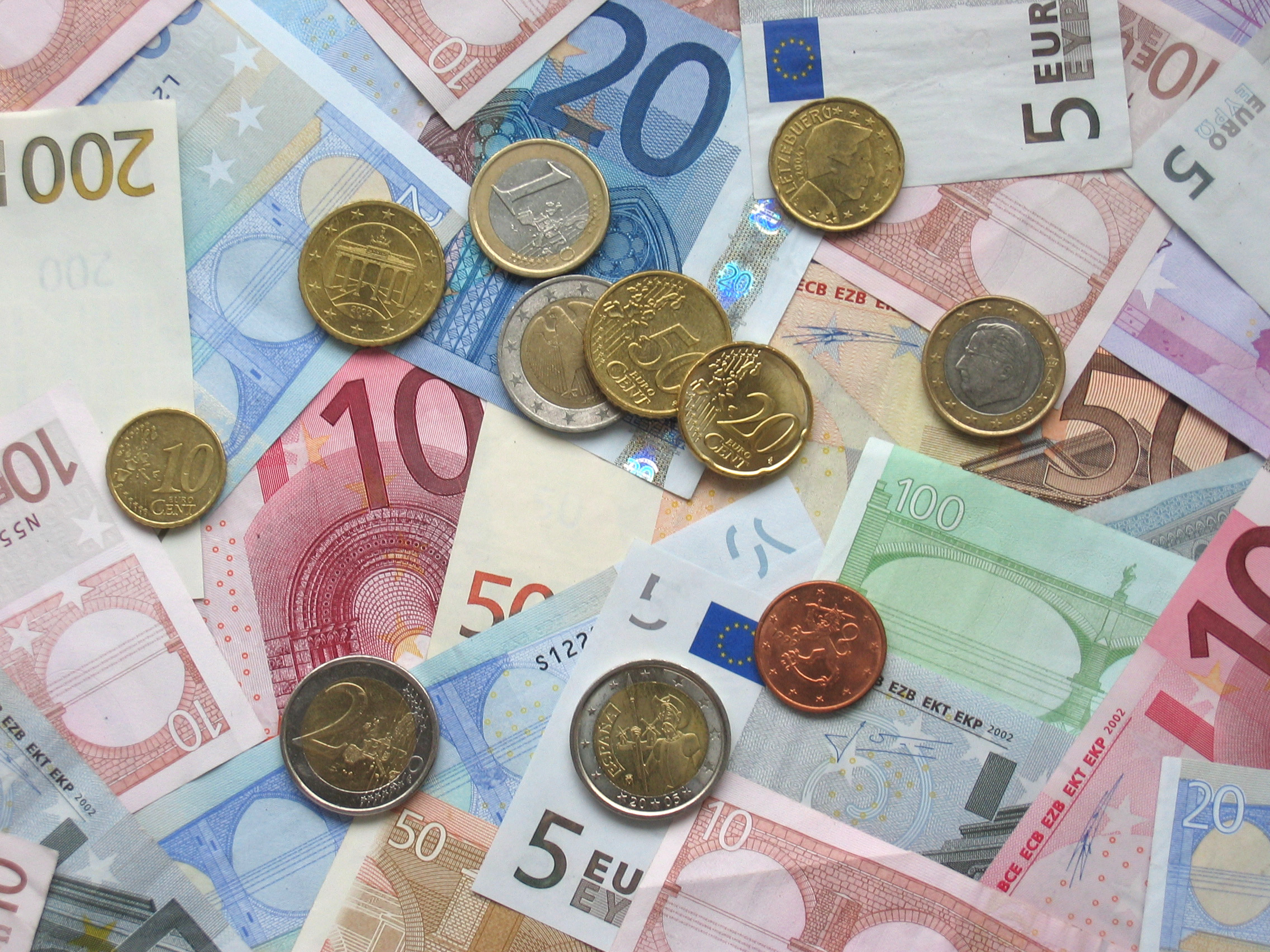
Why CPH does not like Euros?


This year I noticed that two European airports, located in non-euro countries, discriminate against paying with euro cash. I am sure there are more such airports, but I have just experienced that in Copenhagen and Riga. This is a little bit surprising as both of these airports are significant players in their region (Nordic and Baltic Countries respectively). Even more, both of them aspire to become even more important, to offer more destinations and to capture more transit passengers.

The last wish -- to capture transit passengers -- almost sounds like an obligation to accept euros for an European airport. True, both of them accept it. But the exchange rate may be rather unfavorable, and the change is given in the local currency, in this way rendering the euro cash next to unusable. Why that? I offer three potential explanations, one political and two economic ones…
  1. Operating with two currencies in every single shop may be too costly, possibly because most non-local customers use credit card anyway. However, passenger ferries in Northern Europe regularly accept currencies of both departure and destination port. It shouldn't be too different for an airport.  
  2. This is a form of price discrimination. Foreigners without a credit card do not have a choice -- either you accept the unfavorable terms or you exchange money with even worse rates. But I doubt those without credit card belong to the least price-sensitive group...
  3. For political reasons, the shops cannot treat euro on equal terms with the local currency. I remember stories of this sort, but unfortunately not the details. But why should politicians care, especially while they also want to have their "pet airport" to gain even more traffic and fame? 
I don't know the answer. Anyone else?

Tuesday, November 1, 2011

Miljöömaks ja kuidas seda kompenseerida

Muinsuskaitse nõuded ajaloolistele hoonetele on võrreldavad maksuga. Et vältida vanemate elupiirkondade lagunemist, tuleks (nõutele vastavat) renoveerimist osaliselt kompenseerida.
Täpsemalt Tartu Postimehes.

Wednesday, September 21, 2011

Public Goods Provision as an Anti-Immigration Argument?

USA Immigration at JFK
The public goods game is an explanation to why so often too little is done to promote the common cause. The idea itself is very simple. Imagine we have several players. Everyone can decide how much resources to put into the "common pot". Next, the content of the pot is multiplied (by a number less then the number of players) and distributed evenly back to all the players. Obviously, the best solution for everyone were to invest a lot and gain back even more. Unfortunately, for every dollar I invest, I receive back less than one (although I receive a slice of what the others have invested). Hence, a rational selfish player will not invest anything at all and solely free-ride on the others investments. As experiments indicate, the people around us are not quite that bad, but most will still devote less than optimal amount of resources for the public good.
Now imagine that instead of players, we have countries. The common pot are the public goods, such as crime prevention or public highways. Voters in every country are free to pay taxes and build up such public goods. But afterwards, they are also free to move to whichever country they want. What would rational voters do? First, they would pay no taxes, and second, they will move to the country with best amenities. Sounds like the public goods game, right?
However, for the analogy to work, the public goods must be non-excludable -- it must be hard to avoid free-riding on the taxpayers bill. However, from the viewpoint of immigration, many public goods, usually given as examples of non-excludable goods, are actually excludable. This includes highways (can be financed by fuel taxes), social security (can be made conditional on some sort of contribution period) and public schools (if immigrants can be taxes, this money can by used for constructing new schools). If population growth (not just through immigration) is slow enough, and newcomers pay taxes, you can expand all of the above examples. The excludability originates from the fact that governments can tax the (potential) users, and expand the supply through this source of funding. Note that you still may have a conflict between rather rich locals and poor immigrants, each preferring a different level and variety of goods.
What cannot be easily expand include some sort of inherently limited resources one cannot produce at all, such as minerals, arable land, but also street space in a busy downtown. Although these are public goods as well, the public goods game as described above does not directly apply for these (another one, called "tragedy of commons", does). There is also a type of amenities which are non-excludable even in case of countries and governments. This includes information, environment protection, and other stuff for which national borders play no role.
In conclusion, free-riding on public goods provided by locals is a valid but possibly quite weak argument against liberal immigration policy. Strength of it depends on the degree to which the immigrant population can be taxed, i.e. whether immigrants are in legal employment.
Note also that there are more ways immigration and public goods provision are related. For instance, studies find that more diverse population leads to less public goods provision, possibly through low level of solidarity in heterogeneous society. That's a different story, however.