Showing posts with label democracy. Show all posts

Wednesday, November 21, 2018

Brexit: Support Theresa May. At Least for Now

Brexit: Support Theresa May. At Least for Now.

Brexit: Support Theresa May. At Least for Now.

I argued earlier that a major flaw with the Brexit referendum was lack of any positive program in case of leave wins. The current political spectacle in London is an attempt to define such a program, and the withdrawal deal that Theresa May has negotiated is one related proposal. It satisfies no-one. But it is the only realistic compromise we are now left with.

The central problem with Brexit

The central problem with Brexit now, 2.5 years after the referendum, is still the same: Britons cannot agree what "leave" means. The country is fairly equally split between leavers and remainers, and unfortunately these two opposite preferences are hard to reconciliate. The options in the middle, along the lines of the "Norway option", satisfy only a few.

I think the best way forward in summer 2016 had been simply to take time off. Theresa May could have started her prime ministership by asking: Well, voters. You want out? So let's see what kind of options we have here, and what do you think about these. And waited with triggering the article 50 until she had an answer to these question. Unfortunately, this was not the case. There were no attempts to start a serious discussion about what Brexit may mean, and what kind of compromises are possible.

I do not see such attempts now either. The prime minister's repeated claims that there will be no second referendum sounds like "I don't care about which Brexit you want." Moreover, accusing those who are worried with no-deal outcome for torpedoing the negotiators and being part of the "project fear" is neither an invitation to a serious dialogue. Instead of trying to build a consensus, at least a somewhat consensus, the leaders are pushing to implement their own favorite flavor of Brexit. This has not worked well, but mainly because there is no consensus in the Conservative party either, and not because of concerns regarding the "will of the people".

IMG 2797 Manchester anti-Brexit protest for
       Conservative conference, October 1, 2017
It is not just that Britons cannot agree on what does leave mean. A large number of people do not want to leave EU at all. Anti-Brexit march at Conservatives' conference, Oct 1st, 2017.

Take time off now

But I don't think the second referendum is a good idea. It would suffer from some of the same flaws as the first one. While we now can offer a positive program, for instance "no deal", "May's deal", and "remain", the majority of votes will probably go to both of the extreme options, and that will give a closely split vote again. Hence there will again be no clear mandate about how to proceed. But the political battle over the exact wording of the question, the pre-referendum campaign, and post-referendum interpretation will deepen the existing cleavages, increase resentment and undermine support for the democratic institutions in Britain.

I think what UK needs now instead is just time off. It cannot have time off as EU member any more, at least not without a rushy U-turn and without badly hurting the feelings of the large group of leave-minded people. I think we should have a second referendum. But not now. Let's the smoke clear and contours of the post-Brexit world appear. Let also one of the options garner clearly more support than the alternatives.

But so far, let's take Theresa May's deal. No one is happy with it, I know. I am not happy either. But it is a realistic deal, and it allows UK to stay in the EU-s "waiting room" while it attempts to understand if it wants to enter again or leave for good. Call this "transition period". But the transition is not about the trade negotiations, but about UK trying to transition into a country that can somewhat agree on it's future.

Wednesday, July 25, 2018

What is wrong with referendums vol 2: Brexit

What is wrong with referendums vol 2: Brexit

What is wrong with referendums vol 2: Brexit

In a previous post I discussed some of the problems with referendums. Brexit referendum had it's share of issues. I'll discuss here two of these.

Restricted categories of voters

First, it violated the principle that everyone who has large stakes in the process can have a say. Two groups that are most affected by British EU membership and it's potential termination are the EU citizens living in UK, and UK citizens living on the continent. Unfortunately, these two groups had limited voting opportunites. British expats can only vote up to 15 years after leaving the UK, and Non-British EU citizens (except Irish, Maltese, and Cypriots) were excluded by a political decision. Maybe exaggerating a bit, but one may say that only those who weren't using the EU provided free movement were deciding it's fate.

In a broader sense it is a common situation: migrants usually cannot vote (despite paying taxes) in their new host countries, and often find it hard or impossible to vote in their countries of origin as well, so migration-related policies are decided by people who are not moving. This is partly because of design, insiders are keen to keep their exclusive rights, but partly due to insiders' inherently better knowledge and better networks.

No positive question

Second, the referendum asked a "negative" question—there was little indication what will happen in case "leave" wins. If "stay" had won, the answer had been simple—more of the same. But leavers had no positive program, and one can argue that leave voters may have voted for very different and incompatible ideas.

Brexit referendum ballot
One of the central issue with the Brexit referendum was lack of any positive program. Two years later, the UK government is still debating what does "Leave the European Union" mean.

If one disregards the slight margin, one can still argue that leaving the EU was "will of the people". However, one cannot extend this claim to any particular type of Brexit, or to any particular reason, such as immigration. These claims are either based on polls or some other kind of interpretation. But polls and interpretations are just that—polls and interpretation—and not the "will of the people".

It looks like Britons have currently at least two incompatible "wills". Because of the slight margin and blurred options, the referendum gave a mandate not for leaving the EU, but to bring the UK and EU relationship back to the drawing board. This may mean leaving the EU but that should be a different decision, taken years later, and including a positive program for what will happen in that case.

Saturday, November 21, 2015

What is Wrong with Referendums? A Reply to Geert Wilders

Recently (2015-11-19) Geert Wilders published an article in New York Times arguing that Europe should hold national referendums on immigration policy. But referendums are not necessarily fair, nor are they the ultimate form of democracy. Referendums have two problems: first, only insiders can vote, even on questions that largely concerns outsiders. Second, everyone has a single vote of equal weight, even in case where the importance of the outcome differs widely.

Who Can Vote?

Current "universal" voting is limited to "insiders", those who are either confined to a certain territory, or possess a certain legal status. In case of national referendums, these are typically citizens of the country; in local referendums these may be residents of a city. Outsiders cannot participate, even when voting over issues that have major consequences for them. This violates a central pillar of democracy, the ability to influence decisions that affect you.

A referendum over immigration policies is just such an example. Unless potential immigrants also participate, we cannot talk about universal democratic decision. Similar issues arise when neighborhood residents vote for restrictive zoning laws. The potential "immigrants" to the neighborhood who are adversely affected cannot participate because they are not residents. The Greek referendum of 2015 shared similar traits: only Greek citizens were voting over a decision that involved most of the EU.

Greek 2015 referendum ballot
Greek 2015 referendum ballot. The referendum had several problems, only Greek citizens voting over a pan-European decision was perhaps it's most serious flaw.

How Big Is the Vote?

Another problem with referendums is the "size" of vote. Traditionally, everyone has a single vote. This is true even if different people have very different stakes in the question. In this way the majority can always outvote a minority. For instance, in many places the majority may outlaw homosexuality. The Swiss minaret law is an outcome of a referendum that was flawed in this way. I don't know how many Muslims and non-Muslims actually care about minarets, but I can imagine it is a far less important issue for non-Muslims. But they could easily muster a majority. As an extreme example, imagine that Hitler put Nuremberg Laws, the Nazi laws that robbed Jews of their rights, on a national referendum. Would we consider the outcome democratic? Analogously, potential migrants may outvote the whole EU if given an equal weight.

Solutions

Unfortunately, these two problems cannot easily be corrected. Although it is not fair to exclude outsiders from decision–making, and give equal say for those with unequal stakes, we cannot calculate the fair vote size. Referendum is justified when the electorate has roughly equal stakes and outsiders are little affected. If this is not the case, one should not call for a referendum.

Instead, we may strive toward inclusive representative bodies that also involve outsiders. In case of the current refugee crisis it should include representatives from both EU, and refugee origin and transition countries. Such conferences, potentially meeting regularly, would ensure that insiders have more rights but outsiders will also have a say.

Wednesday, November 18, 2015

Britain in EU: More Powers to National Parliaments?

EU: More Power to National Parliaments Is not Always Democracy

More power to national parliaments is a democracy–enhancing move only if the national decision-making occurs in areas that have little impact on the others. If the opposite is true, it diminishes the control we have over the important decisions.

*

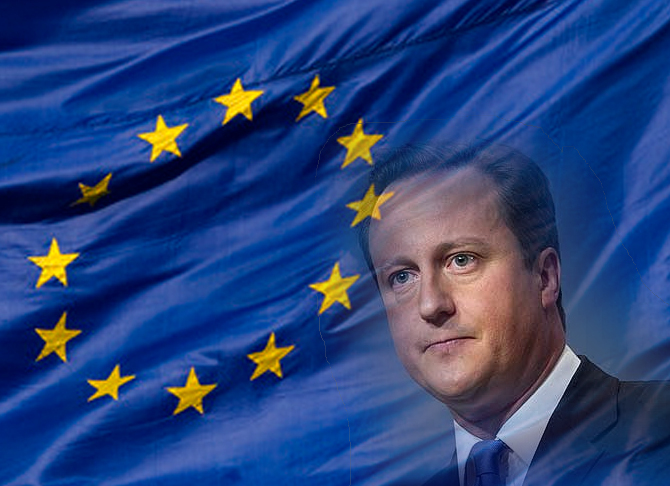
David Cameroon has announced his requests to the EU. One of them is a larger role for national parliaments in shaping EU regulations. Although national parliaments may be the most democratic institutions we have, the areas where such a "repatriation of powers" occurs must be chosen carefully. Otherwise it may weaken the democracy instead. There are two main reasons.

David Cameroon and EU
Just a common market—or an "ever closer union"?

Interdependence

First, and most importantly, only some decisions can be made by national parliaments. Many decisions can not, such as international treaties, trade agreements and international law. Almost by definition this type of legislation is not made by individual states. Analogously, parliaments do not vote on what the other countries do, be it introduction of incompatible regulations, or conducting irresponsible fiscal policy in the hope that we will bail them out later. Neither have we much room to vote about technical standards, such as Apple's new operating system or airport security procedures.

A number of major problems EU currently faces cannot be solved at national level. For instance, the refugee inflow must either be received, or stopped, at the EU border. The current country-based decision making essentially allows Hungarian parliament to decide over number of refugees in Serbia and Croatia, and, if German "national parliament" decides to close it's borders, it has severe impact on Greece and Italy. Analogously, the "single market", one of the pillars of EU, is a form of extended free-trade agreement, a large number of common standards for product labeling, food safety, and labor treatment. By definition, agreement is something we cannot do alone.

More powerful national parliaments in this type of decisions will weaken EU without strengthening the member–states. We will notice more small inconveniences, such that you cannot use certain mobile services in another EU country, or your business has to hassle with incompatible regulations across the border. Negotiations among 28 sovereign states are far more slow and costly than central decisionmaking, and there is little incentive to overcome even small special interests in the name of a common good. National politicians are elected to stand for "national interests", and all 28 national interests are seldom aligned with the common one. The underlying problem is interdependency, our decisions may influence others even if the others do not belong to our "nation". Such decisions should be done by inclusive higher level bodies, such as European Parliament.

Enfranchisement of EU Migrants

The other, and currently less important reason, is enfranchisement of EU migrants. This is a large group of people who cannot vote in national elections but is subject to the corresponding national legislation. This is simply not fair. I think the first-best solution would be to give EU migrants voting rights rather soon after moving to another country (say, in 2 years). But until it happens, decision–making by EU institutions offers this group more say about their lives.

*

Finally, even EU is too small for many important decisions. Many contemporary problems, such as global trade agreements, climate change, or the puzzle of Middle–East, cannot be solved at EU level either. We need global governance more than ever before. How to achieve this in a democratic way is one of the big challenges of our time.

Monday, September 1, 2014

Splitting states: Donbas and Scotland

I am often not happy that "territorial integrity" and "sovereignty" are considered valid arguments against separatism.  I think that regions should have an option to separate from the country they are part of, and eventually merge with another country. This also applies to Crimea and Donetsk.  But such a separation must fulfill a number of criteria.

First, the decision must be democratic.  Democratic decision is not a hasty referendum.  It is a long open process where the idea of independence is brought up, pros and cons discussed, and more-or-less stable opinion formed.  I don't know what might be a relevant time scale here but I suggest a few years at minimum.  It is definitely more than a few weeks.

The democratic decision also means the media is free to report, and all people are free to express their opinion.  If some parties cannot do it because of threats, abductions and killings, the process is not democratic and the results of the related referendums questionable.  Potential separatists should be very much interested in demonstrating to the outside world that the support they claim does not "grow out from the gun barrel".  Unfortunately, in Eastern Ukraine they rather demonstrate the opposite.

Gunmen at Simferopol airport
A bad example of separatism.  "Little green men" at Simferopol airport, 2014-02-28.  Crimea was literally taken at gunpoint, no negotiations with Ukraine were conducted.

Third, separation must be negotiated with the former mother country. In general, a region that strives to independence is eligible to a share of the national assets (including the military ones) but should also inherit a part of the national debt.  On top of that, one has to agree on thousands of everyday details like cellphone rates, bank transfers, public pensions and education certificates.  All this must be ironed out, preferably some of it already before the independence referendum, to give the voters a better picture what they are choosing between.

None of these criteria were followed in Crimea and in Donetsk. That's why I am against separatists there—not because of the Ukrainian territorial integrity.

English-Scottish border
A road to another region with raging separatism.  No checkpoints, no gunmen here. 
But we also have good examples of separatism.  Scotland will vote on independence on Sept 18, 2014.  This date has been put forward one-and-a-half years in advance after a debate that has lasted for decades.  All pro-independence politicians realize that eventual separation goes hand-in-hand with long negotiations with the (rest of the) UK, and no-one is proposing to set up checkpoints at Tweed river.

Wednesday, March 20, 2013

Allowing EU parliament to set and collect taxes would strengthen democracy

Despite its many laudable achievements, EU is moving from one crisis to another. Currently, a fight is continuing over the federal budget. In many ways it looks like a true democracy in action—there are only a limited number of democracies that are able to pass such a bill without complex and costly negotiations. Unfortunately, another side of story looks less normal. The main issues cannot be solved between political forces inside of the structure (i.e. EU) itself but between EU central structures and the member states. In particular, the countries re-negotiated the budget which was already passed by the EU parliament. I have several concerns about such a process.

First, it is not exactly enhancing European democracy. EU is often accused of suffering from a democracy deficit as most of the important decisions are done by bodies that are not directly accountable to the public. Here we observe an example where a decision by the only directly elected political body in EU must be approved by the Council (governments of member states), a body which is not elected.

Second, the version of the budget, approved by the member states, is smaller. I am not arguing for a big government here, but many weaknesses in Europe today are related to too little federal decision-making. The examples include common foreign and defense policy, immigration policy, ESM and Eurozone banking regulations, and areas such as cellular networks, pensions systems, education systems, etc, which suffer from little coordination and too many incompatible regulations. These are areas where more centralized decision-making has a potential to offer substantial efficiency gains even in the medium run, including lower member-state budgets.

Third, reacting to financial crises, like the bailouts of Greece and Cyprus, proceed in a slow and inflexible way because the consensus of all member states is needed. Such decisions should be made by a central EU body (and potentially approved by EP). That would lead to a lot faster decision-making. However, EU can decide over money only if it is able to collect it.

The only feasible long-run solution I can envision is to introduce real federal taxes (currently, only custom tariffs are determined by EU). By federal taxes I mean taxes levied not to member states but to individuals and businesses across the EU. These should be based on income, value-added or wealth, exactly as most of the
current taxes. In this way the EU would be more a project of "individuals" and less that of the "countries". Obviously, if we want to avoid tax hikes, the member states should lower their contributions accordingly.

EU net budget 2007-2013 per capita
Currently, most of the EU budget is payed by the member states. Dark red states pay the most and the blue ones receive the most of EU money per capita. Europe should move toward more direct taxes, levied directly to individuals and businesses, instead of member states.

I agree this would constitute a major step toward the European Federation. I do not think this will happen soon. But certain steps might be feasible already now. For instance, we could start harmonizing tax concepts—not even rates, but the understanding what exactly constitutes the tax base and how to measure it. In order to introduce common taxes on income or value added, we first have to agree on how these concepts are defined. One might also want to unify tax exemptions, a major reason why tax systems are so hard to understand.

Time to move?

Thursday, February 16, 2012

Music as a Public Good


Anti-ACTA meeting, Nuremberg 2012-02-11
Internet seems to have thoroughly changed the playing field for the music industry. The previous attempts to introduce anti-copying measures or improve the legislation (from the music industry's perspective), have not been of much help. Below I compare the current situation of intellectual property-related industries with some other parts of the economy. Perhaps a little exaggerated, but I hope this helps to make the point.

Today, Music is Non-Excludable

Due to the new technology, it is not possible any more to limit the potential audience of a song (or a movie, or a book). This is what non-excludability means. Through most of the history it was possible to grant the access only to those who pay. Today, this does not work.
To create a non-excludable product may be something new for the recording industry but this is far from a unique situation. Much is produced around us with no way to keep the free-riders away. The examples include traditional public goods, such as street lights or clean sidewalks, open-source software, or research results. As there is no way to limit access to these goods (or, in some cases, narrowing the access is not desired), all this is given away for free.

How Does this Influence the Music Industry?

Part of the industry is probably not affected. Orchestra music, for instance, is highly subsidized anyway, and the target audience is not going to substitute an exclusive evening in the noble music-hall for a internet download. In some cases, an unknown (or even a well known) band may make most of their income from live concerts or from being invited to play at parties or other events. For this group, the new world may not look too different either.
But there are also authors who earn most of their income by selling their recordings for a fee. This is the group who may fare substantially worse. How well they do, depends on how easily they can shift to a different revenue source. Unfortunately, I do not have any data here, but I believe that any serious policy proposal should include this analysis.

Do We Need a Fat Government?

Non-excludable music is essentially a public good: once recorded, it is accessible to everyone. Public goods are typically financed through taxes (like street construction), donations (like public concerts), grants (research) or simply enthusiasm (community gardens). In particular, this suggests that government financing will play a more significant role in the future music industry. Many books, plays, and movies are created through various scholarships and grants already today.
Note that various taxes on empty CD-s or broadband internet should be seen in this light. Free music must be financed somehow, including through higher taxes. You pay CD-tax even if you never use it for copying music, exactly as you help to finance all kind of public services, even those you never use, through your income tax. This may not be all that good news for the indebted Western governments. But here we have an example of a technological change which leads to larger government role.

Would it Be Worth of It?

It seems like most people are quite happy with the new world. Unauthorized downloading seems to be overly popular and tougher rules, such as proposed by SOPA, PIPA and ACTA, cause a large-scale public outrage. It seems that most of us would rather sacrifice the recording industry than our internet-freedom. Democracy is very much about choice. By choosing free music and other intellectual products, we also get a little higher taxes and perhaps somewhat poorer choice, as there will be less money and less players in the industry.

Wednesday, September 21, 2011

Public Goods Provision as an Anti-Immigration Argument?

USA Immigration at JFK
The public goods game is an explanation to why so often too little is done to promote the common cause. The idea itself is very simple. Imagine we have several players. Everyone can decide how much resources to put into the "common pot". Next, the content of the pot is multiplied (by a number less then the number of players) and distributed evenly back to all the players. Obviously, the best solution for everyone were to invest a lot and gain back even more. Unfortunately, for every dollar I invest, I receive back less than one (although I receive a slice of what the others have invested). Hence, a rational selfish player will not invest anything at all and solely free-ride on the others investments. As experiments indicate, the people around us are not quite that bad, but most will still devote less than optimal amount of resources for the public good.
Now imagine that instead of players, we have countries. The common pot are the public goods, such as crime prevention or public highways. Voters in every country are free to pay taxes and build up such public goods. But afterwards, they are also free to move to whichever country they want. What would rational voters do? First, they would pay no taxes, and second, they will move to the country with best amenities. Sounds like the public goods game, right?
However, for the analogy to work, the public goods must be non-excludable -- it must be hard to avoid free-riding on the taxpayers bill. However, from the viewpoint of immigration, many public goods, usually given as examples of non-excludable goods, are actually excludable. This includes highways (can be financed by fuel taxes), social security (can be made conditional on some sort of contribution period) and public schools (if immigrants can be taxes, this money can by used for constructing new schools). If population growth (not just through immigration) is slow enough, and newcomers pay taxes, you can expand all of the above examples. The excludability originates from the fact that governments can tax the (potential) users, and expand the supply through this source of funding. Note that you still may have a conflict between rather rich locals and poor immigrants, each preferring a different level and variety of goods.
What cannot be easily expand include some sort of inherently limited resources one cannot produce at all, such as minerals, arable land, but also street space in a busy downtown. Although these are public goods as well, the public goods game as described above does not directly apply for these (another one, called "tragedy of commons", does). There is also a type of amenities which are non-excludable even in case of countries and governments. This includes information, environment protection, and other stuff for which national borders play no role.
In conclusion, free-riding on public goods provided by locals is a valid but possibly quite weak argument against liberal immigration policy. Strength of it depends on the degree to which the immigrant population can be taxed, i.e. whether immigrants are in legal employment.
Note also that there are more ways immigration and public goods provision are related. For instance, studies find that more diverse population leads to less public goods provision, possibly through low level of solidarity in heterogeneous society. That's a different story, however.

Saturday, March 5, 2011

Miks valimislubadusi uskuda ei saa ja kas midagi üldse uskuda saab

Lingin siia oma valimisteemalise kommentaari Postimees onlines.

By U.S. Army photo by Staff Sgt. Jacob Caldwell [Public domain], via Wikimedia Commons


Tuesday, March 30, 2010

Eurointegratsioon kui riigikaitse

Väikeriigi iseseisev kaitsevõime jääb alati piiratuks. Samas on ka Eurointegratsioonil riigikaitseline dimensioon, millele peaks rohkem tähelepanu pöörama.
*
Nii nagu aastal 1919 suudaks praegune Eesti armee tagasi lüüa üle piiri valguvad halva relvastuse ja moraaliga jõugud, mitte aga suure riigi armee. See on Eesti iseseisva kaitsevõime põhimõtteline probleem -- ka siis kui sõjalisi kulutusi oluliselt suurendada, jääb väikeriigi võitlusvõime väga piiratuks.
Riigikaitse teine oluline alustala on NATO. Vaatamata oma vaieldamatule sõjalisele võimekusele ei anna ka NATO täielikku turvatunnet. Probleem on selles, et NATO tegutsemine põhineb suveräänsete riikide otsustel. Otsus Eestile sõjaliselt appi tulla langetatakse valitsuste poolt, kes on vastutavad ainult oma valijate ees. Balti riikide kaitsmine on kulukas ning kasu sellest on väike -- Baltikum moodustab vaid tühise osa "lääne" territooriumist ning rahvastikust. Nii jääb alati küsitavaks, kas NATO (s.t. liikmesriikide valijad) on valmis astuma suurde sõtta Euroopa mõistes marginaalse piirkonna nimel. Mõned küsitlused näitavad, et paljudes riikides nad selleks valmis ei ole.
EL kui (mõningane) julgeolekutagatis ei ole uus mõte. Siin on probleemiks EL peaaegu olematu sõjaline dimensioon. Samas ei oska ma pikemas perspektiivis peale EL ette kujutada ühtegi teist tõelist Balti riikide julgeoleku garantiid.
Kuidas võiks EL tagada meie julgeoleku? See saaks toimuda ainult läbi liidu sõjalise võimekuse ning integratsiooniastme olulise kasvu. Esiteks peaks tekkima tugev võitlusvõimeline euroarmee, mille baasid asuksid nii Balti maades kui ka mujal Euroopas, ning kus teeniksid eesti-läti-leedu poisid koos teiste EL riikide kodanikega. Sellisel armeel peaks olema keskne juhtimine mis alluks ainult Euroopa Liidule, mitte rahvuslikele valitsustele. Niisugusel juhul langeks ära (vähemalt väheneks oluliselt) võimalus, et "keegi ei tule meile appi". Küsimus oleks hoopis, et kas "Euroopa armee tahab hoiab Baltikumi". Minu meelest on see hoopis teistmoodi küsimus -- aga ainult siis, kui euroarmee ei põhine rahvuslikel maakaitseüksustel.
Kas niisugune mõte on puhas utoopia? Praegu küll. Pikemas perspektiivis pean seda aga võimalikuks. Samas ei näe ma ka kaugemas tulevikus lahendust ei väikeriigi nõrkusele ega NATO otsustusmehhanismidele.
Kuidas peaksid Balti riigid praegu sellele hüpoteetilisele võimalusele panustama? Läbi tihedama integratsiooni EL (ja ka trans-atlantiliste) struktuuridega. Isegi kui Euroarmee mõte iialgi ei realiseeru, on tihedamast integratsioonist kaitsevõimele ikkagi abi. Esiteks, see aitab meie sõjaväelastel ning poliitikutel pääseda ligi olulisele informatsioonile, ja teiseks -- see suurendab teiste riikide kodanike soovi vajadusel meile appi tulla. Seega peaks Eesti üldiselt toetama EL edasist integratsiooni soosivaid ideid. Tõsi, praegu ei asenda integratsioon iseseisvat kaitsevõimet.
EL ja NATO nõupidamistel, kohtumistel ning paraku ka sõdades tuleb rohkem osaleda. Ka Afganistanis kaitsevad meie poisid Eestit -- mitte ainult läbi turvalisema maailma loomise, vaid ka läbi selle, et me saame rohkem "omadeks", rohkem iseenesestmõistetavaks osaks läänemaailmast, kelle vastast rünnakut tajutakse rünnakuna "meie" vastu. Teiseks on vaja rohkem isiklikke sidemeid teiste EL riikide (ning USA) inimestega. Käige Euroopas tööl ja õppimas ning kutsuge teiste riikide kodanikke siia tööle! Ka see aitab neil tajuda Eestit ühe osana nende maailmast. Kolmandaks peaks eestlased (ja ka teised Ida-Eurooplased) olema rohkem kursis Euroopa meediaga. On vaja "integreeruda Euroopa infoväljaga" kui soovite. See aitaks ka neil, kes EL kohtumistel ei osale, aru saada, mida mõtlevad inimesed, kes meile sõja korral appi peavad tulema. Ning lõpuks, ei tohiks rõhutada meie erinevust "vanast Euroopast". Erinevused on ning jäävad, aga nende esile toomine ei aita tekitada vajalikku ühtsustunnet.